


If you have lived in Melbourne for any length of time, you already know the joke: four seasons in one day. But for your home exterior, that is no laughing matter. The constant cycle of summer UV radiation, heavy winter rain, coastal humidity (for homes near Port Phillip Bay), and temperature swings between freezing Yarra Ranges winters and 40-degree heatwaves puts extraordinary stress on external wall surfaces.
When it comes time to refresh or protect your home’s exterior, two options dominate the conversation: rendering and painting. Both can transform a tired, dated facade into something modern and attractive — but they work in fundamentally different ways, offer different levels of protection, and suit different budgets and home types.
Rendering involves applying a cement or acrylic-based coating directly to the masonry, creating a new surface layer. Painting applies a protective decorative film over the existing surface. Both have their place in Melbourne and across Victoria — and choosing incorrectly could mean costly rework within just a few years.
This guide is designed to give Victorian homeowners a clear, honest comparison so you can make a confident, informed decision before committing to either option.
Melbourne homeowners face a unique challenge when refreshing their home exterior: Victoria’s famously unpredictable weather — scorching summers, wet winters, and everything in between — means the wrong surface treatment can fade, crack, or peel within just a few years.
In this expert guide, you will discover the real differences between rendering and exterior painting, how each performs in Victorian conditions, their costs and maintenance requirements, and how to decide which option is the right investment for your home.
What Is Home Rendering?
Rendering is the process of applying one or more coats of a cement, lime, acrylic, or polymer-based mixture to the exterior walls of a building. The result is a smooth (or textured) solid surface that covers the underlying brickwork, blockwork, or masonry entirely.
In Victoria, rendering is particularly popular for brick veneer homes built in the 1960s–1990s. Many of these properties have dated red or cream brick that homeowners want to modernise without the cost of full reconstruction. A quality render job can completely transform the appearance of these homes, bringing them in line with contemporary architectural trends such as the popular Hamptons, Coastal, or Modern Australian styles seen widely across Melbourne’s eastern and bayside suburbs.
Types of Render Used in Melbourne
- Cement render — traditional sand and cement mix; the most durable but can crack if applied incorrectly or on flexible substrates
- Acrylic render — polymer-modified, flexible, and highly weather-resistant; the most popular choice for Melbourne homes
- Texture coat / texture render — thicker decorative coat available in dozens of textures (Tuscan, fine sand, rough cast); popular for character-rich finishes
- Polymer render — similar to acrylic but often more flexible; excellent for movement-prone surfaces
- Lime render — traditional choice for heritage homes; breathable and suited to older masonry construction
Key Benefits of Rendering
- Creates a completely new, uniform surface over tired or dated brickwork
- Adds a genuine protective barrier against moisture penetration — important in Melbourne’s wet winters
- Can improve thermal insulation and reduce heating/cooling costs
- Highly durable when correctly applied — quality renders last 20–30 years
- Wide range of textures and finishes to suit any architectural style
- Significantly increases kerb appeal and property value
|
⚠️ Important: Render Requires Skilled Application Rendering is a skilled trade. Poor preparation, incorrect mix ratios, or applying render over an unsuitable substrate can lead to cracking, delamination, or moisture trapping — all expensive to fix. Always engage a licensed and experienced renderer, particularly for heritage or complex substrates. |
What Is Exterior House Painting?
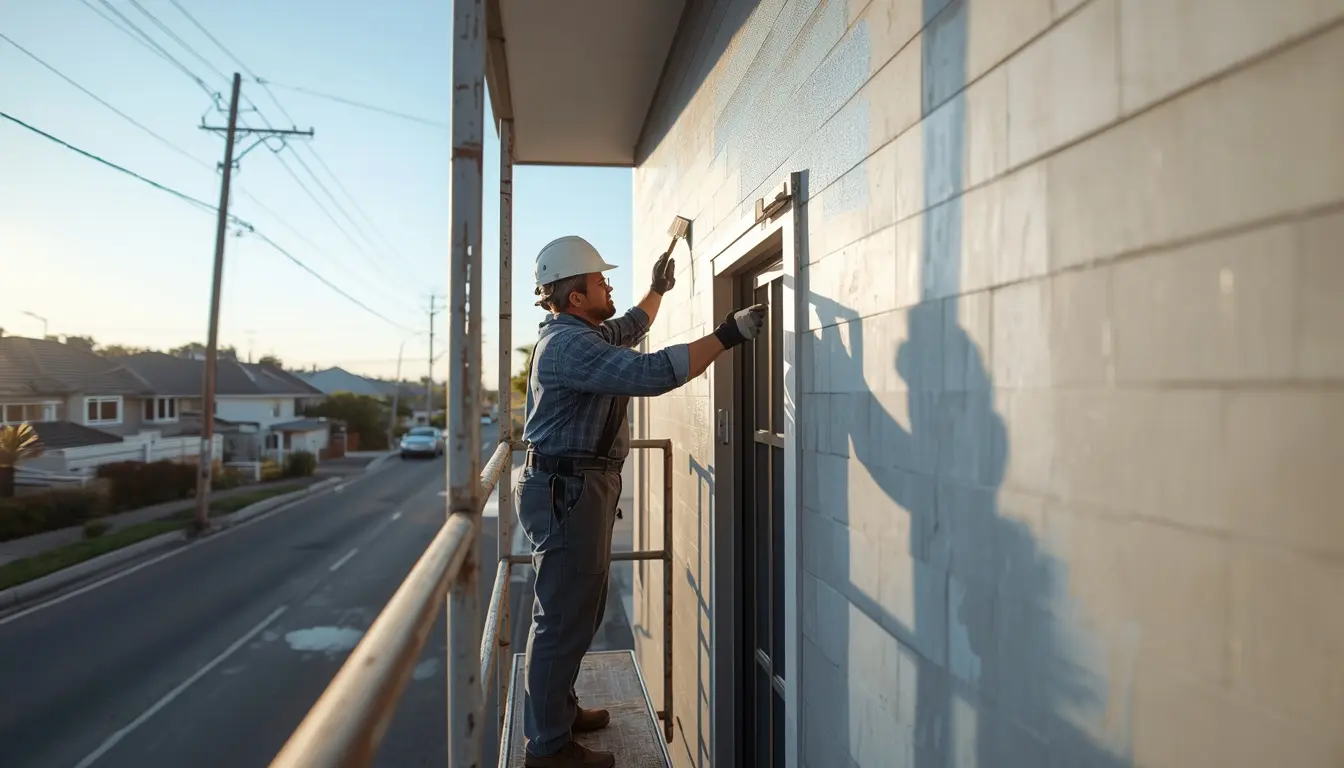
Exterior painting involves applying one or more coats of specially formulated exterior-grade paint to the outside walls of your home. Unlike interior paints, exterior paints are engineered to withstand UV radiation, rain, temperature extremes, and mould growth — all major concerns in the Victorian climate.
Painting is a more flexible and cost-effective option than rendering. It works on a wide range of surfaces including rendered walls, weatherboard, fibre cement cladding, brick, and timber — making it suitable for virtually every home type across Melbourne and regional Victoria from the inner-city terrace to the country homestead.
Types of Exterior Paint Suitable for Victorian Conditions
- Acrylic exterior paint — the gold standard for Melbourne homes; water-based, flexible, UV-resistant, and fast-drying; resists the temperature extremes of Victorian summers and winters
- Elastomeric paint — extra-flexible formula that bridges hairline cracks; excellent for rendered surfaces that experience movement
- Weatherboard / timber paint — specially formulated for timber surfaces with enhanced moisture resistance; critical for Melbourne’s heritage weatherboard homes
- Texture paint — thicker paint formula that adds subtle texture while filling minor surface imperfections
- Heat-reflective paint — growing in popularity across Melbourne’s northern and western suburbs; reduces heat absorption and cooling costs in summer
Key Benefits of Exterior Painting
- More affordable than rendering — lower upfront cost with wide colour and finish options
- Suitable for almost every exterior surface type across Victoria
- Faster project turnaround — most homes can be fully painted in 3–7 days
- Easier to refresh or change colour in the future without major surface work
- Improves weatherproofing and protects against mould, moisture, and UV damage
- Modern exterior paints offer 10–15+ year lifespans when properly applied to a prepared surface
Rendering vs Painting: Full Comparison for Victorian Homeowners
The table below summarises the key differences between rendering and painting for Melbourne and Victorian properties across every major decision factor.
|
Factor |
Rendering |
Exterior Painting |
|
Surface coverage |
Creates a completely new surface layer |
Applies a coating over existing surface |
|
Best suited to |
Brick, block, masonry homes needing transformation |
Rendered, weatherboard, fibre cement, brick |
|
Appearance change |
Dramatic — entirely new look and texture |
Refreshes colour and finish; maintains surface profile |
|
Durability |
20–30 years (acrylic render) |
10–15 years (quality acrylic paint) |
|
Weatherproofing |
Excellent — solid barrier against moisture |
Good — depends on paint quality and prep |
|
Thermal insulation |
Can improve insulation (especially with insulated render systems) |
Minimal thermal benefit (except reflective paints) |
|
Cost (average) |
$30–$70 per m² (supply and labour) |
$10–$30 per m² (supply and labour) |
|
Project timeline |
5–14 days (plus curing time) |
3–7 days |
|
Crack resistance |
Acrylic render is flexible; cement render can crack |
Elastomeric paint bridges hairline cracks |
|
DIY suitability |
Not recommended — skilled trade required |
Possible for experienced DIYers; professional result is superior |
|
Colour flexibility |
Limited once applied — repaint or re-render to change |
Easy to repaint in future |
|
Heritage suitability |
Lime render for heritage; check council restrictions |
Excellent for heritage homes; wide colour options |
|
Maintenance frequency |
Every 10–20 years (clean and repaint) |
Every 7–12 years (repaint) |
|
Property value uplift |
High — significant transformation |
Moderate to high |
Rendering and Painting Costs in Victoria (2025)
Cost is one of the most common questions Victorian homeowners ask when comparing rendering and painting. The answer depends on the size of your home, the condition of existing surfaces, the materials chosen, and the complexity of the project.
Typical Rendering Costs in Melbourne (2025)
|
Render Type |
Cost per m² (Supply & Labour) |
Typical Home (200 m²) |
Lifespan |
|
Cement render |
$25–$45/m² |
$5,000–$9,000 |
20–30 years |
|
Acrylic render |
$35–$60/m² |
$7,000–$12,000 |
20–30 years |
|
Texture coat |
$30–$55/m² |
$6,000–$11,000 |
15–25 years |
|
Polymer render |
$40–$65/m² |
$8,000–$13,000 |
20–30 years |
|
Insulated render system |
$80–$150/m² |
$16,000–$30,000 |
25–40 years |
Typical Exterior Painting Costs in Melbourne (2025)
|
Scope |
Cost per m² (Supply & Labour) |
Typical Home (200 m²) |
Lifespan |
|
Single coat (touch-up) |
$8–$14/m² |
$1,600–$2,800 |
5–7 years |
|
Two coats (standard repaint) |
$14–$22/m² |
$2,800–$4,400 |
8–12 years |
|
Full preparation + two coats |
$18–$30/m² |
$3,600–$6,000 |
10–15 years |
|
Elastomeric / premium paint |
$22–$35/m² |
$4,400–$7,000 |
12–15 years |
|
Heritage home (complex prep) |
$25–$45/m² |
$5,000–$9,000 |
10–15 years |
|
💡 Cost Tip for Victorian Homeowners Rendering is a higher upfront investment but the cost per year of protection is often comparable to repainting — especially when you factor in the frequency of repaints. A quality acrylic render at $10,000 lasting 25 years costs ~$400/year in amortised terms. A repaint at $5,000 every 10 years costs $500/year. For long-term homeowners, rendering can be the smarter financial choice. |
How Each Option Performs in Victoria’s Climate
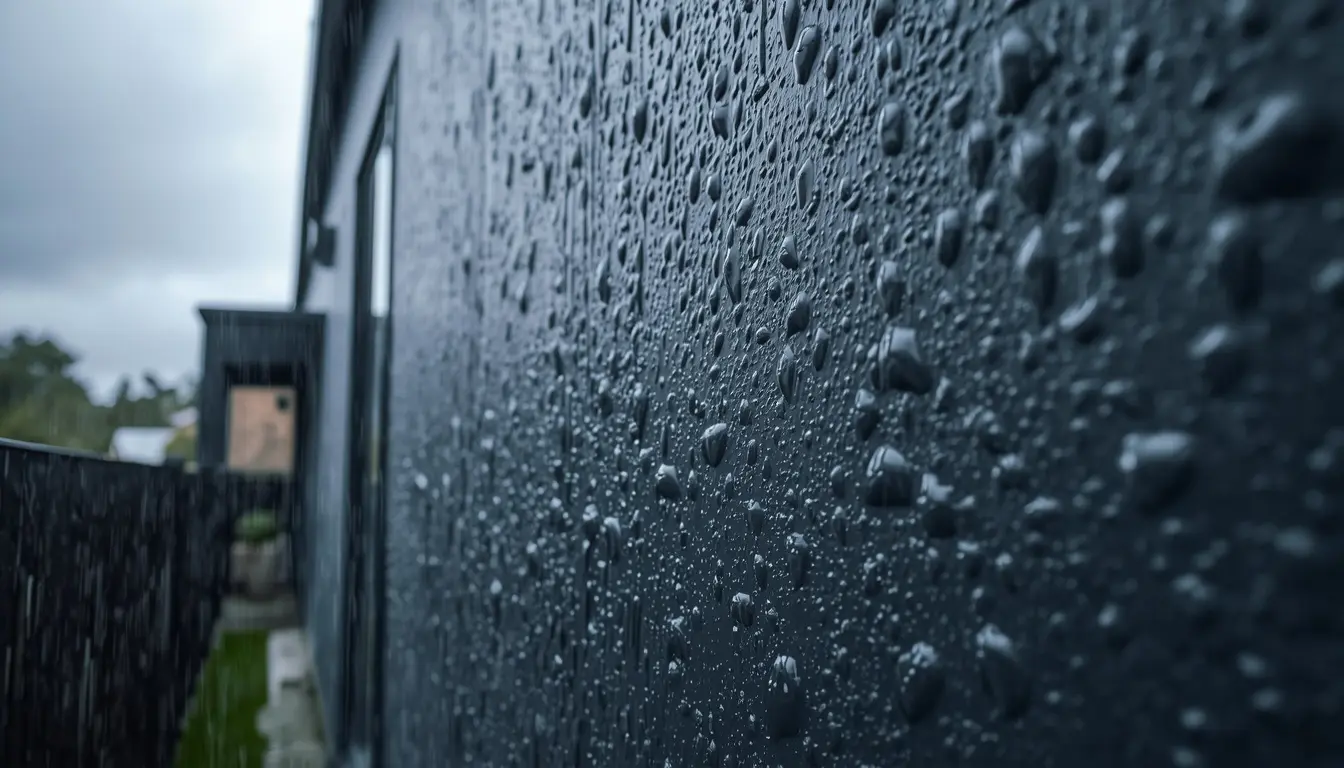
Victoria’s climate varies enormously from the bayside suburbs of Port Melbourne to the alpine communities near Mount Buller, from the hot, dry summers of the Mallee to the fog-prone Yarra Valley. Any external surface treatment needs to perform across a range of demanding conditions.
Summer Heat and UV Radiation
Melbourne summers regularly reach 38–42°C, and UV radiation in Victoria is among the highest in the world. Acrylic and polymer-based renders include UV stabilisers that resist fading and degradation. Quality exterior acrylic paint also performs well, but cheaper paints fade quickly under Victorian UV conditions. Tip: always specify a paint or render with a quality UV rating and consider lighter colours in north-facing elevations to reduce heat absorption.
Winter Rain and Moisture
Victoria receives between 400 mm and 1,200 mm of rainfall annually depending on location. Moisture penetration is the enemy of exterior walls — it causes paint to peel, render to crack, and can lead to rising damp and mould in worst-case scenarios. A quality acrylic render is particularly effective here, acting as a near-impermeable barrier. Exterior paint on a properly prepared surface also performs well, provided it is applied evenly and re-coated before it deteriorates.
Temperature Cycling and Movement
Melbourne’s famous four-seasons-in-one-day phenomenon causes building materials to expand and contract repeatedly. Rigid materials — including cement render and lower-quality paint — can crack under this stress. Flexible acrylic render and elastomeric exterior paint are specifically formulated to handle this movement, making them the preferred choices for most Victorian homes.
Coastal Conditions (Bayside and Surf Coast)
Homes in Melbourne’s bayside suburbs (Brighton, Sandringham, Beaumaris, Frankston) and along the Surf Coast (Torquay, Anglesea, Lorne) face additional challenges from salt air and humidity. Both acrylic render and premium exterior paint can perform well in these environments when correctly specified — your contractor should always be informed of coastal proximity so the right product is selected.
Heritage Homes (Inner Melbourne and Regional Victoria)
Victorian-era and Edwardian homes in suburbs like Carlton, Fitzroy, Richmond, Ballarat, and Bendigo require special consideration. Many original brickwork surfaces need to breathe to manage moisture — sealing them completely with a non-breathable render or paint can cause serious long-term damage. Lime render and breathable acrylic paints are the preferred choices for these properties. Always check with Heritage Victoria and your local council before altering the exterior of a heritage-listed property.
Rendering or Painting: Which Is Right for Your Melbourne Home?
The right choice depends on the specific characteristics of your home, your goals, and your budget. Use the guide below as a starting framework.
Choose Rendering If…
- Your home has dated brick that you want to modernise or completely transform
- You are planning to stay in the property long-term and want a low-maintenance, highly durable solution
- You want to dramatically improve the thermal performance of your home’s walls
- Your brickwork has surface irregularities, old mortar damage, or minor structural movement that needs to be masked
- You are targeting a smooth, contemporary, or textured architectural finish
- You are renovating for sale and want maximum kerb appeal uplift
Choose Exterior Painting If…
- Your home already has a rendered, weatherboard, or fibre cement surface in reasonable condition
- You want to refresh the colour or protect the surface without a full render job
- Your budget is more limited and you need a cost-effective solution in the near term
- Your property is heritage-listed or subject to council restrictions on rendering
- You want the flexibility to change the colour of your home in the future
- You need a faster project turnaround with minimal disruption to daily life
|
🏠 Can You Render Over Painted Walls? Yes, in many cases — but it requires careful preparation. Existing paint must be fully assessed for adhesion, and in many cases it will need to be removed or treated before render can be applied. Applying render over poorly adhered paint is a common cause of delamination failures. A professional assessment by an experienced renderer is essential before any decision is made. |
Maintenance Tips for Rendered and Painted Exteriors in Victoria
Maintaining a Rendered Exterior
- Wash down with a low-pressure hose or soft brush annually to remove dirt, mould spores, and environmental deposits
- Inspect render for hairline cracks every 2–3 years, especially after extreme heat events; fill small cracks with flexible filler before they admit moisture
- Repaint or apply a render sealer coat every 10–15 years to refresh the colour and re-seal the surface
- In coastal areas, wash more frequently (every 6 months) to remove salt deposits
- Avoid high-pressure washing — it can damage the render surface and drive moisture into the wall
Maintaining a Painted Exterior
- Inspect the paint surface annually for peeling, chalking, bubbling, or cracking — these are early warning signs of moisture infiltration
- Wash down walls every 1–2 years with a mild detergent solution and soft brush
- Touch up any areas where paint has peeled or chipped within the season to prevent moisture entering the substrate
- Budget for a full repaint every 8–12 years; extending beyond this risks costly substrate damage
- In shaded areas prone to mould (south-facing walls, areas under eaves), apply an anti-mould wash before repainting
Common Mistakes Melbourne Homeowners Make with Exterior Rendering and Painting
Avoid these costly errors that Naxan Renovations regularly encounters when called in to fix substandard exterior work across Melbourne and Victoria.
Skipping Surface Preparation
The most common — and expensive — mistake. Applying render or paint to a surface that has not been properly cleaned, repaired, and primed leads to early failure. This includes painting over old flaky paint, rendering over dusty or oily masonry, or skipping a bonding agent on smooth surfaces.
Using Interior Products on Exterior Surfaces
Interior paint is not formulated to handle UV, moisture, or temperature extremes. Using it outside might look fine initially but will fail rapidly in Victorian conditions, often within 1–2 years.
Applying in the Wrong Weather Conditions
Melbourne weather is notoriously unpredictable. Applying render or paint in extreme heat (above 35°C), direct summer sun, or when rain is expected within 24 hours leads to poor adhesion, bubbling, and uneven curing. Quality contractors always plan around the forecast.
Choosing the Wrong Render Type for the Substrate
Applying rigid cement render over flexible fibre cement sheeting or over a previously painted surface without proper preparation will result in cracking and delamination. Always match the render type to the substrate.
Ignoring Heritage or Council Requirements
Some properties in Melbourne — particularly in inner-city suburbs and historic regional towns — have restrictions on altering the exterior appearance. Always check with your local council and Heritage Victoria before proceeding with rendering a heritage property.
Why Choose Naxan Renovations for Your Melbourne Home Exterior?
At Naxan Renovations, we have transformed hundreds of home and commercial exteriors across Melbourne and Victoria — from full render transformations on dated brick veneer homes to premium repaint projects on heritage properties in regional Victoria.
We understand exactly how Victorian weather behaves and which products, systems, and techniques deliver results that last. Our team does not cut corners on preparation, product selection, or application — because we know that is where the difference between a 5-year and a 25-year result is made.

