Concrete Driveways & Permeable Pavers
Driveway Concreting & Pavers
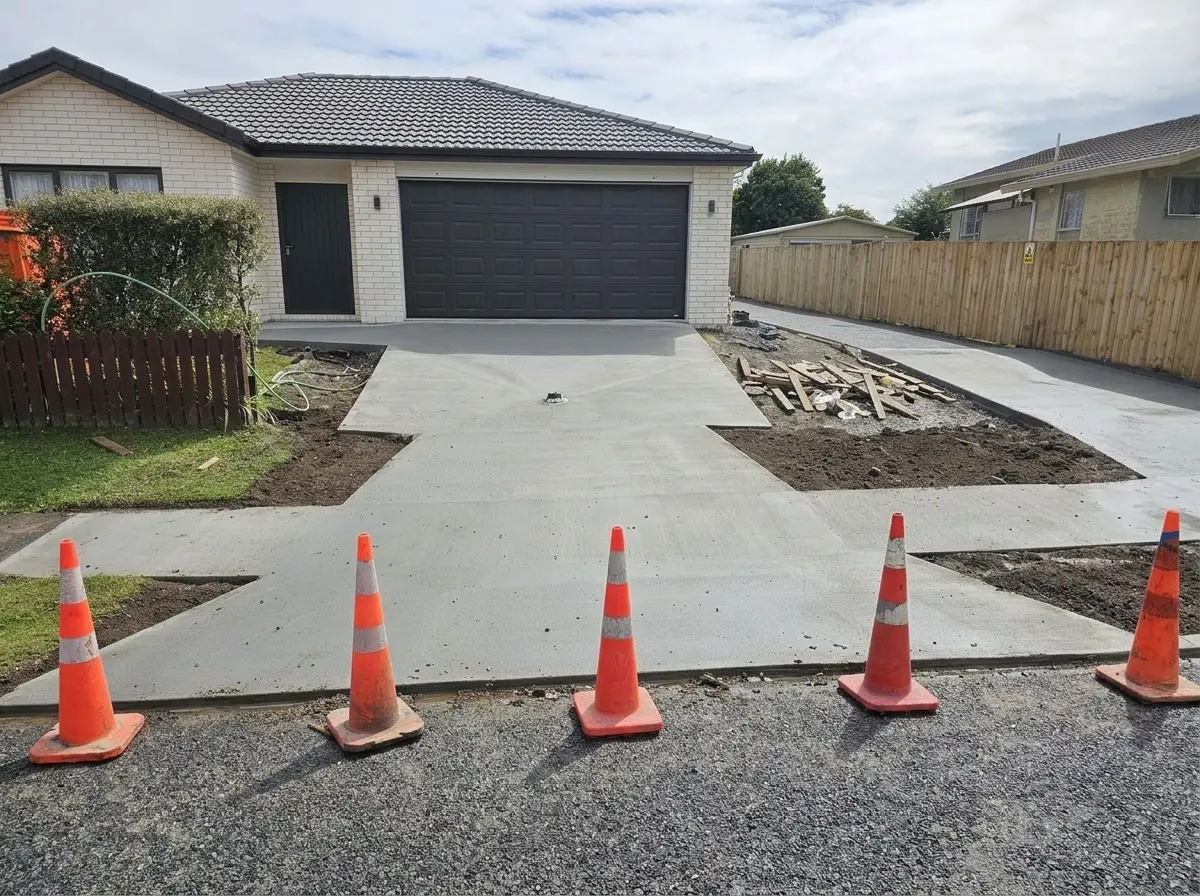
Naxan Renovations delivers complete driveway and access solutions for new build homes, combining poured concrete and permeable paving into a single, cohesive exterior finish. This project took a newly completed home from bare, unfinished ground to a fully surfaced driveway, front path, street crossing, and side accessway.
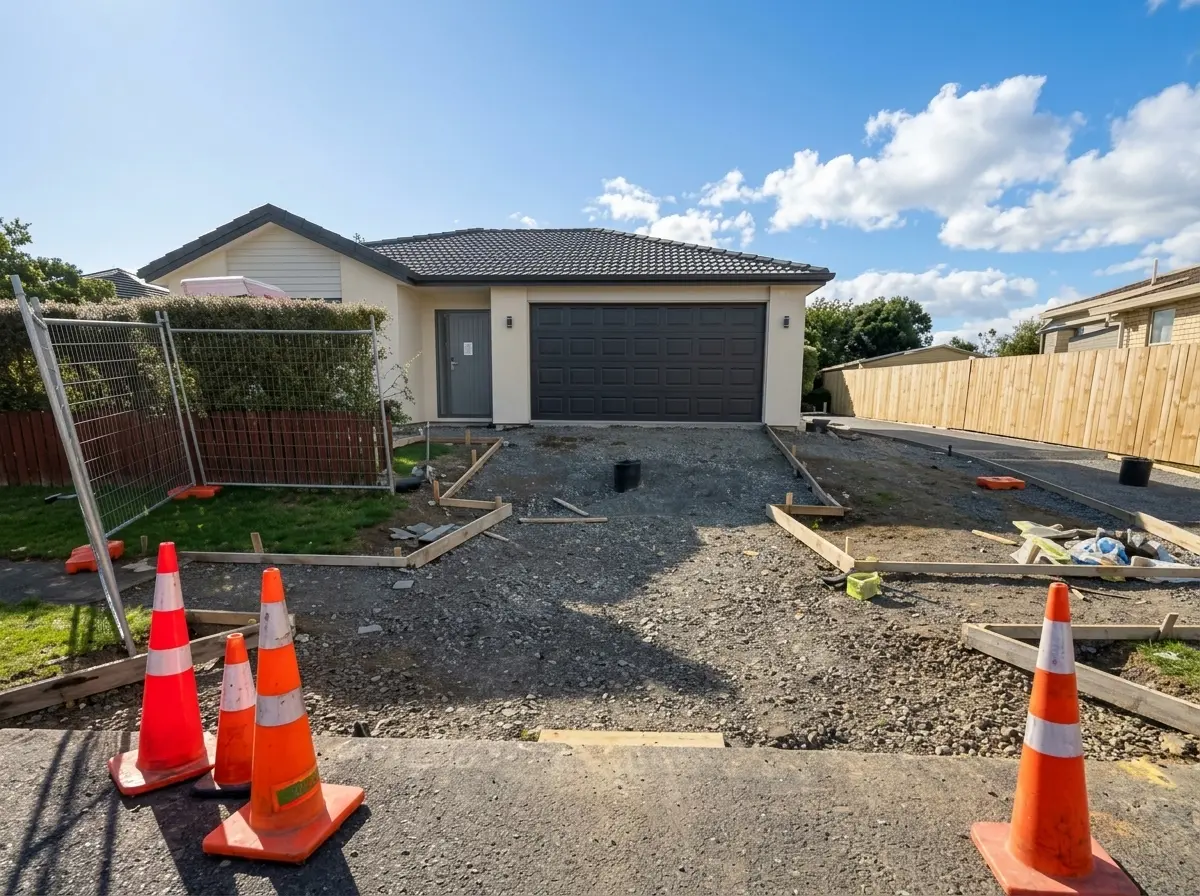
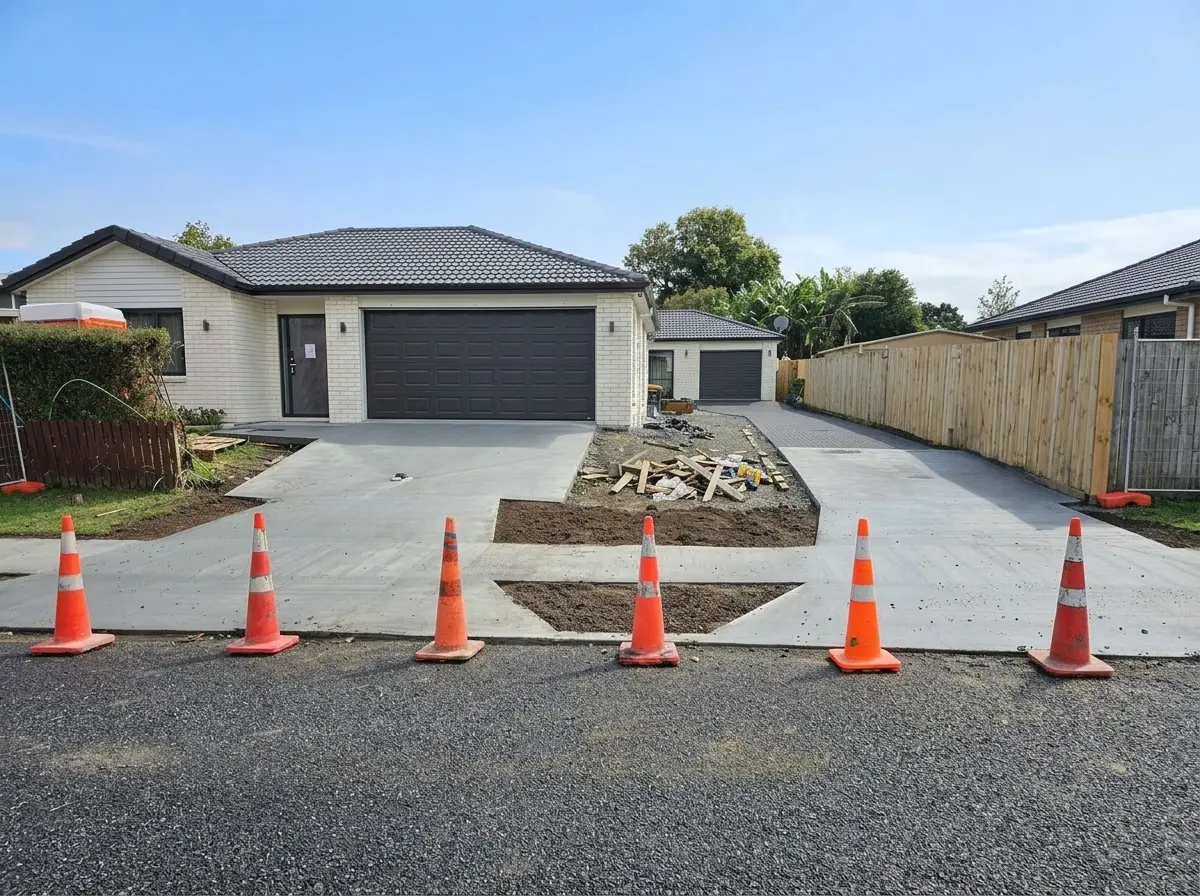
The site started as exposed dirt with no hard surfaces — service lines still run across the ground and no defined access between the street, the main garage, and the second garage at the rear. Naxan Renovations prepared and compacted the base, set formwork to define clean edges, poured and finished the main concrete driveway and crossing, then installed a permeable herringbone paver accessway down the side of the property.
The result is a durable, well-drained, and visually consistent set of surfaces that complete the home’s exterior — combining the strength of reinforced concrete where vehicles turn and park with the drainage benefits of permeable paving along the narrower side access.
Key Features
Each feature of this project is planned to make property access safer, better drained, and built to last — from the compacted base through to the finished concrete and paver surfaces.
Poured Concrete Driveway & Crossing
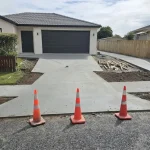
A broom-finished concrete driveway runs from the street crossing to the garage, providing a strong, slip-resistant surface built to handle daily vehicle use.
Permeable Herringbone Paving
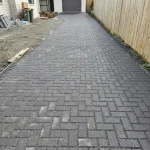
Interlocking pavers laid in a herringbone pattern with open, chip-filled joints allow rainwater to drain through the surface, reducing runoff and supporting stormwater management.
Defined Formwork & Clean Edges
Precise timber formwork shapes the driveway, apron, and path edges, creating straight, professional lines and clean transitions between concrete, paving, and garden areas.


Exposed, uneven ground across the entire frontage, service hoses and cables still run across the surface, and excavation equipment on site with no hard surfaces in place.

The base was cleared, levelled, and compacted with aggregate, and timber formwork was set to define the driveway, apron, and path edges, with cones and temporary fencing managing the street crossing.

A smooth, broom-finished concrete driveway now runs from the street crossing to the main garage with a connected front path, while a permeable herringbone paver accessway runs down the side of the home to the second garage.


The area is cleared, levelled, and built up with compacted aggregate to create a stable, well-draining foundation for both concrete and paved surfaces.
Timber formwork defines the driveway and path edges before the concrete pour and finish, followed by precise herringbone paver installation along the side accessway.
The concrete cures fully, formwork is stripped, paver joints are filled and compacted, and the site is cleaned up ready for landscaping and everyday use.
Bare dirt across the frontage makes the property inaccessible for vehicles, unsafe underfoot, and unfinished in appearance after the build is complete.
Large areas of solid concrete increase surface runoff, which can create drainage issues and may not meet stormwater requirements on smaller sections.
Long, narrow accessways to rear garages are difficult to pour and finish well in concrete, and can look heavy and unbroken across a long run.
A properly compacted aggregate base and formed concrete pour deliver a strong, level driveway and crossing built for regular vehicle loads.
Open-jointed permeable pavers allow water to soak through the surface rather than running off, supporting better drainage and stormwater performance.
Concrete is used where strength and turning space matter most, while pavers handle the narrow side access — giving each area the most practical finish.
Permeable pavers are laid with open joints filled with fine chip, allowing rainwater to drain through the surface into the base below instead of running off, which helps manage stormwater on site.
Concrete offers a strong, seamless surface ideal for main driveways and turning areas, while pavers suit narrower access runs and offer better drainage. Many projects use both, matched to each area.
Most driveway and paving projects take between one and three weeks, depending on the size of the area, base preparation required, and concrete curing time.
Concrete is generally safe to walk on after 24–48 hours, but it's best to wait around 7 days before light vehicle use and closer to 28 days for full strength.
Permeable paving needs occasional cleaning to keep joints clear of debris so water can continue to drain freely, but otherwise requires very little upkeep.
Yes, Naxan Renovations provides a free, no-obligation consultation and quote for concrete driveways, permeable paving, and complete new build exterior surfacing.
31 Latitude Promenade
Truganina, VIC 3029