Preloader

Paver Driveways, Courtyards & Paths

Project Overview

Project Name:

Paver Driveways, Courtyards & Paths

Category:

Pavers

Project Overview

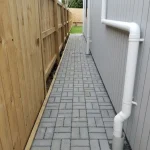
Naxan Renovations designs and installs interlocking paver surfaces across a wide range of residential applications — from full driveway aprons and rear parking bays to enclosed courtyards, entry landings, and narrow side access paths.

Pavers offer a durable, flexible alternative to poured concrete. Because each unit interlocks independently, a paved surface handles ground movement without cracking across the whole slab, and individual pavers can be lifted and reset if services need accessing later. Laid in a herringbone pattern, the interlocking bond distributes vehicle loads across many units rather than concentrating them, which is why it’s the standard choice for driveways and parking areas.

Across these projects, Naxan Renovations has delivered precisely cut edges, flush-set drainage sumps, and clean transitions between paved and poured concrete surfaces — the details that separate a paving job that lasts from one that settles and shifts within a few seasons.

Key Features

Each element of a paving installation is planned to make the finished surface stronger, better drained, and neater at the edges — where most paving jobs fail first.

Herringbone Interlocking Pattern

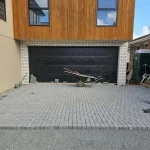
Pavers laid in a herringbone bond distribute vehicle loads across multiple units, making the surface significantly more resistant to rutting and movement than stack-bonded patterns.

Integrated Drainage & Sumps

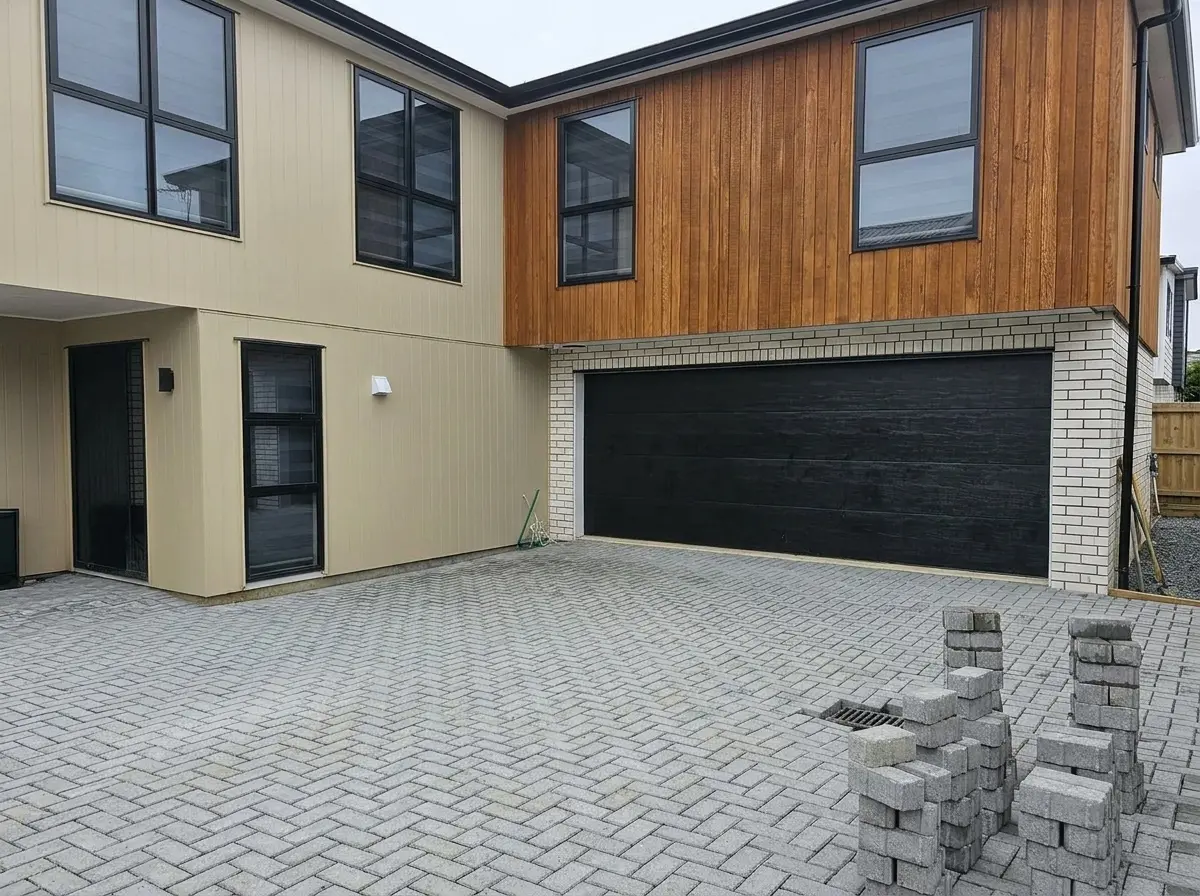
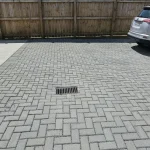
Drainage sumps and grates are set flush into the paved surface, channelling surface water away and preventing pooling across driveways and parking areas.

Precision Cutting & Edge Restraints

Pavers are cut to fit cleanly against walls, garden beds, and concrete edges, with proper edge restraints locking the field in place so the surface doesn’t spread or drop over time.


Project Transformation

In Progress

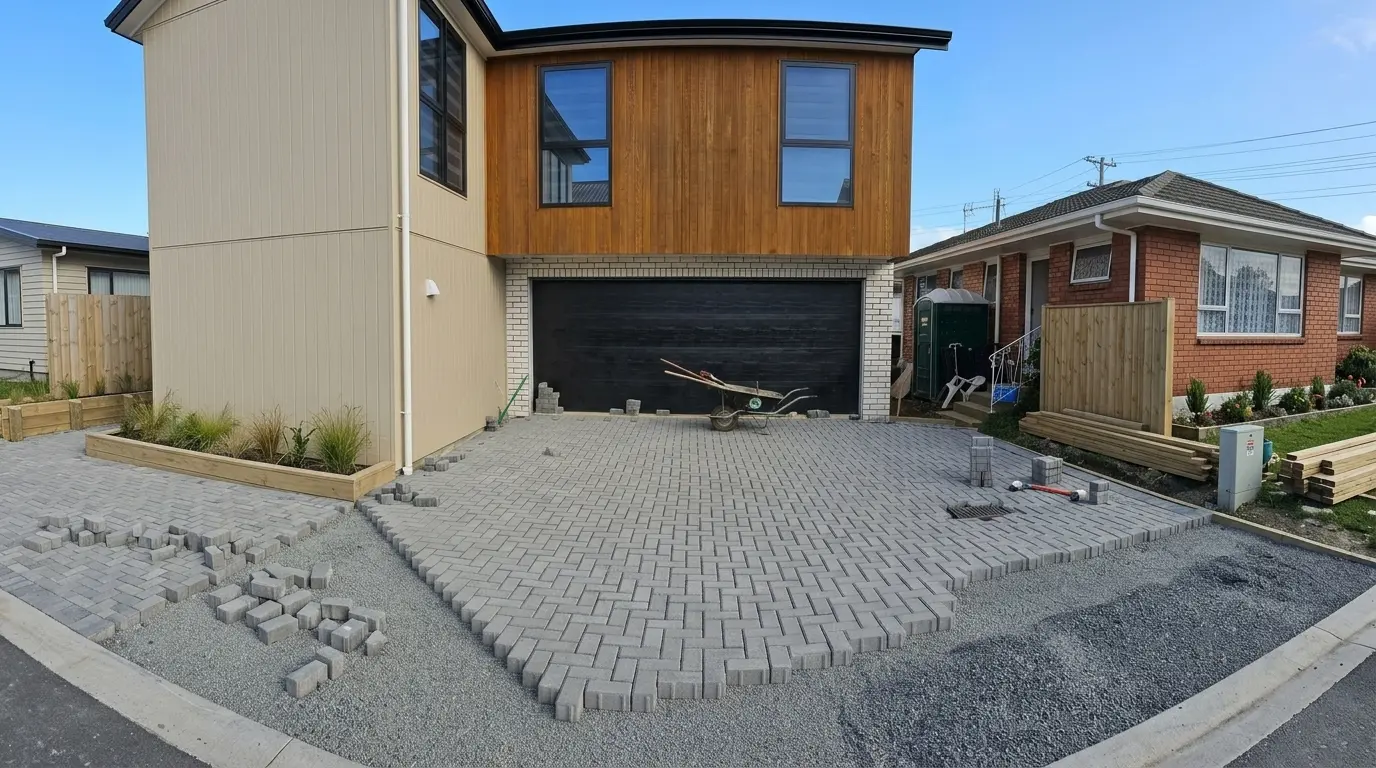
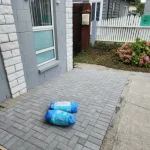
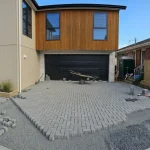
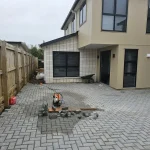
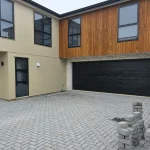
Pavers are laid out across the prepared base working outward from a straight edge, with loose units stacked around the perimeter awaiting cutting. A brick saw on site handles the precise cuts needed around walls, garden beds, and drainage points — the stage where the quality of the final edges is decided.

Detailing:

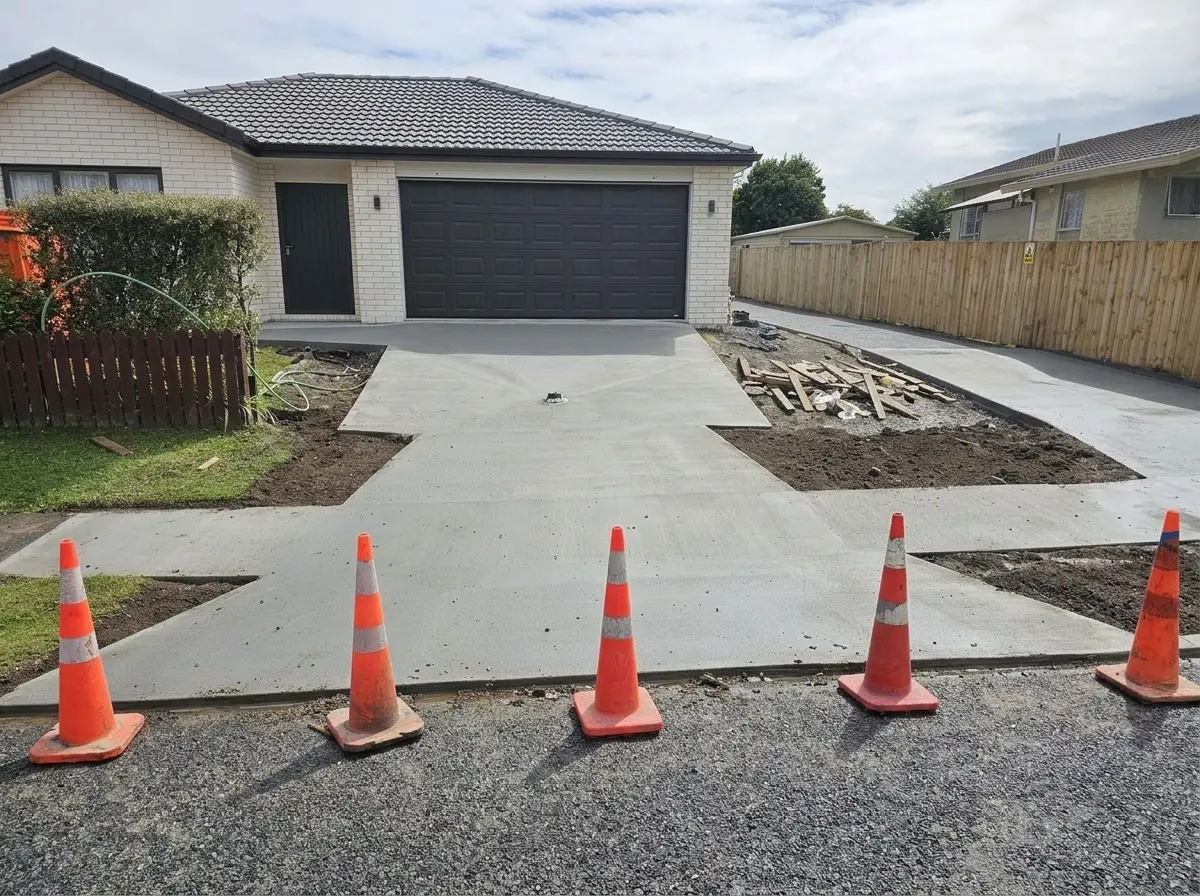
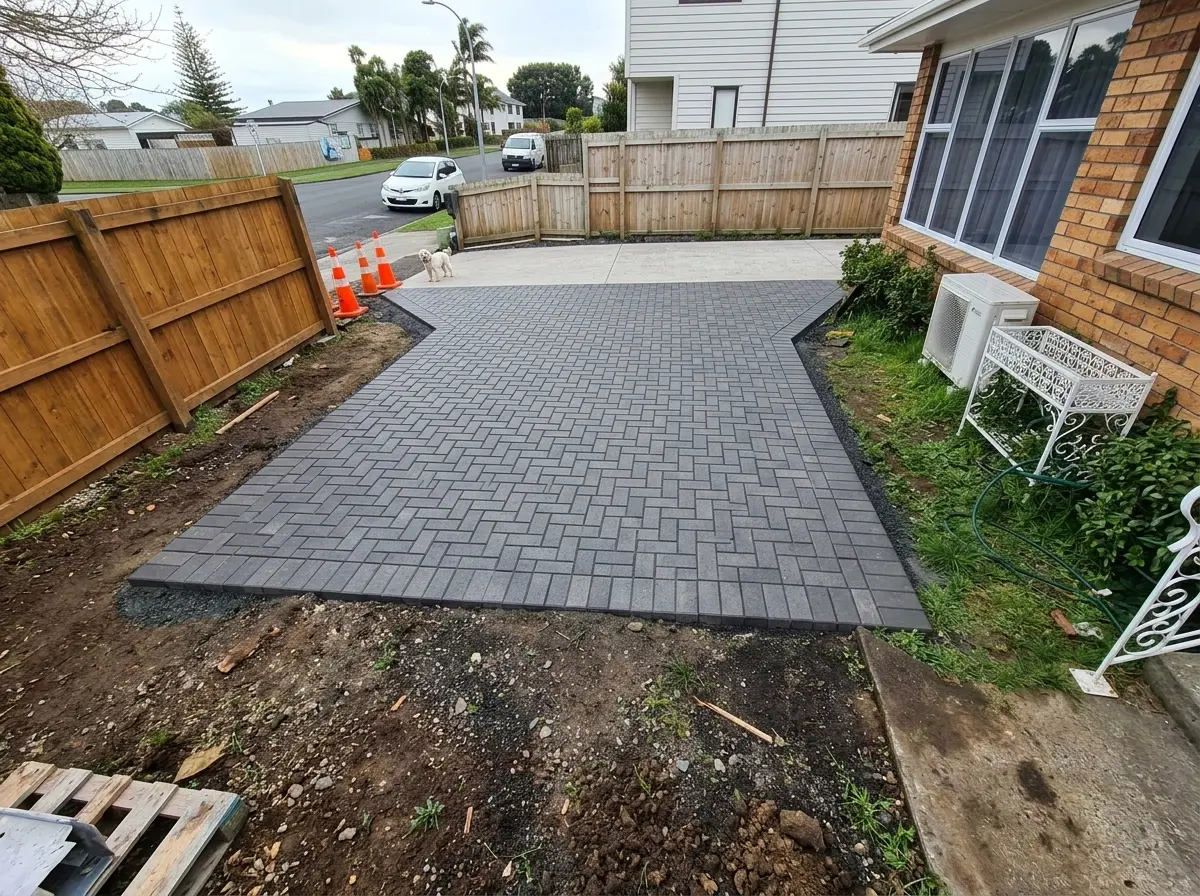
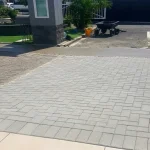
Drainage sumps are set flush into the field, transitions to poured concrete are cut and levelled, and edge restraints are installed to lock the paved area in place.

Completed

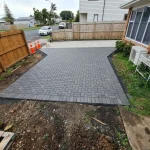
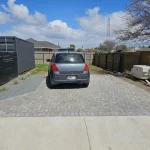
Jointing sand is swept in and the surface plate-compacted, producing a tight, interlocked finish — from wide herringbone driveway aprons and rear parking bays through to enclosed courtyards, entry landings, and narrow side access paths.

Transformation Highlights

Development Process

Base Preparation & Levelling

The area is excavated to depth, built up with compacted aggregate, and screeded with bedding sand to create a stable, correctly graded foundation that drains properly.

01

Paver Laying & Cutting

Pavers are laid to the chosen pattern working off a straight string line, then cut precisely around edges, drainage points, and fixed features for a clean fit.

02

Jointing, Compaction & Handover

Jointing sand is swept into the gaps and the surface is plate-compacted to lock the pavers together, followed by a final clean-up and walkthrough.

03

Project Problems & Solutions

Project Challenges

Surface Water & Pooling

Large paved or sealed areas concentrate runoff, and without proper falls and drainage points, water pools across driveways and against buildings.

Cracking & Ground Movement

Poured surfaces crack across their full width when the ground beneath shifts, leaving permanent damage that’s difficult and expensive to repair.

Messy Edges & Awkward Transitions

Paving that meets concrete, walls, or garden beds badly looks unfinished, and unrestrained edges spread and drop away over time.

Our Solutions

Graded Falls & Flush-Set Drainage

Surfaces are laid to a deliberate fall with sumps and grates set flush into the paving, moving water off the surface and away from structures.

Flexible Interlocking Construction

Because pavers move independently, minor ground settlement doesn’t crack the surface — and individual units can be lifted and reset rather than replacing a whole slab.

Precise Cutting & Proper Restraints

Every edge is cut to fit and locked with an edge restraint, keeping the paved field tight and the transitions to concrete crisp and level.

FAQs

Herringbone is the strongest interlocking bond for vehicle traffic. The angled pattern spreads loads across multiple pavers instead of concentrating them, which resists rutting and shifting far better than straight or stacked patterns.

Concrete gives a seamless surface, while pavers flex with ground movement without cracking, drain better, and allow individual units to be lifted and reset for repairs or service access. Many properties use both, matched to each area.

With a properly compacted base and correct edge restraints, a paver driveway can last decades. Because damaged units can be individually replaced, the surface can be maintained indefinitely without a full replacement.

Yes. Paving is laid to a deliberate fall, and drainage sumps or channels are set flush into the surface where needed to prevent water pooling or running toward buildings.

Edge restraints are installed around the perimeter to lock the paved field in place, and jointing sand is compacted into the gaps so the pavers interlock as a single surface.

Yes, Naxan Renovations provides a free, no-obligation consultation and quote for paver driveways, courtyards, parking areas, and pathways.