

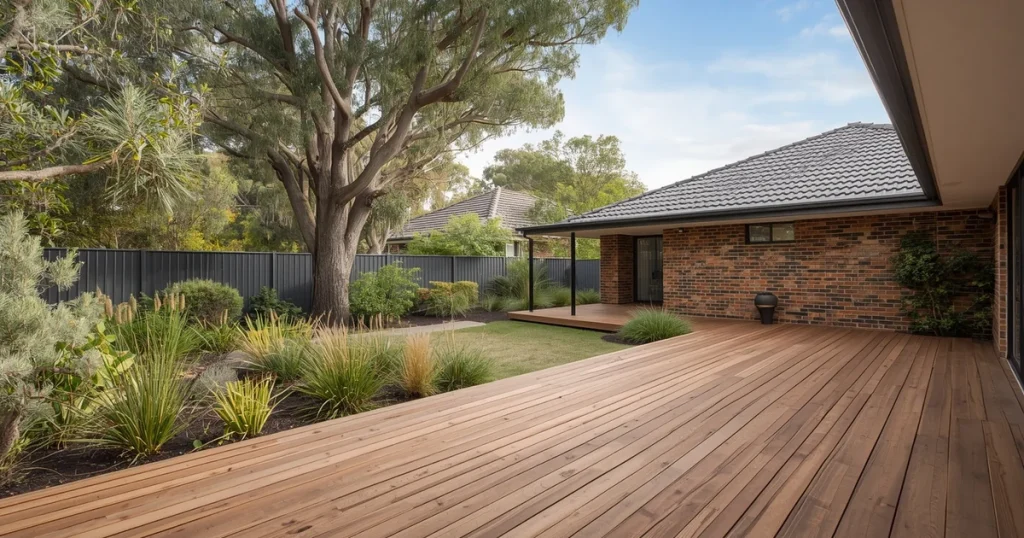
For most Melbourne homes, hardwood (merbau or spotted gum) gives the best balance of looks, longevity, and manageable maintenance. Treated pine costs less upfront. Composite costs more upfront but needs almost no maintenance. The right choice depends on your budget, sun exposure, and how much maintenance you’re willing to do.
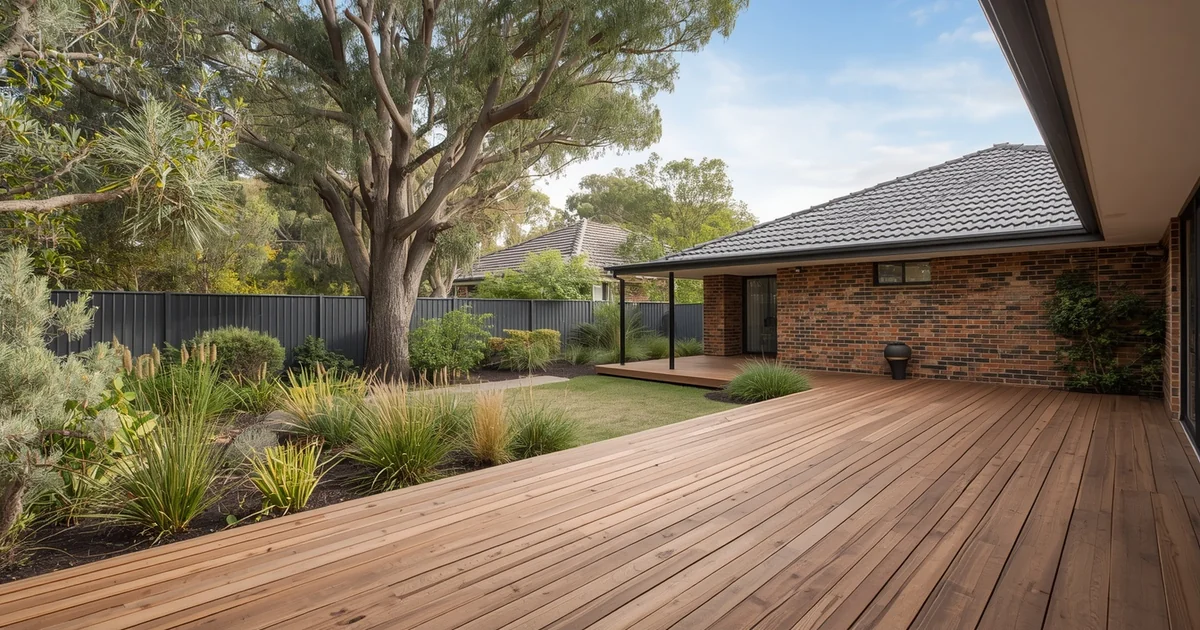
The three main decking timber types
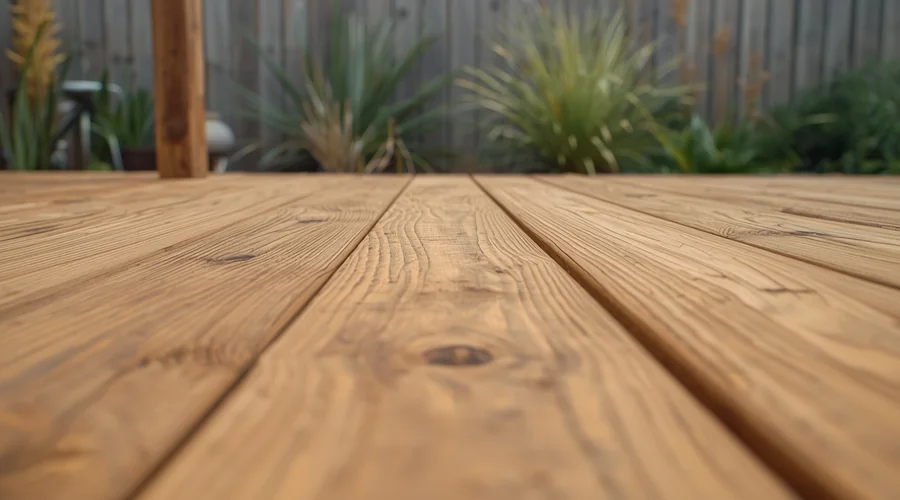
Treated pine is the entry point — widely available, easy to work with, cheapest upfront. Needs oiling or staining every one to two years. Ignore it for a few seasons and it’ll go grey, crack, and start lifting.
Hardwoods — merbau, spotted gum, blackbutt — are denser, naturally resistant to moisture and insects, and look better for longer. Merbau is the most common choice in Melbourne. Oil every 12–18 months rather than every year.
Composite decking is the no-maintenance option — wood fibre and plastic bonded together. Gets noticeably hotter underfoot on north or west-facing decks in summer. If your deck catches full afternoon sun in Werribee or Hoppers Crossing, lighter colours are worth asking about.
Timber type comparison
Choose based on budget, maintenance tolerance, and how much sun the deck gets.
What actually moves the cost
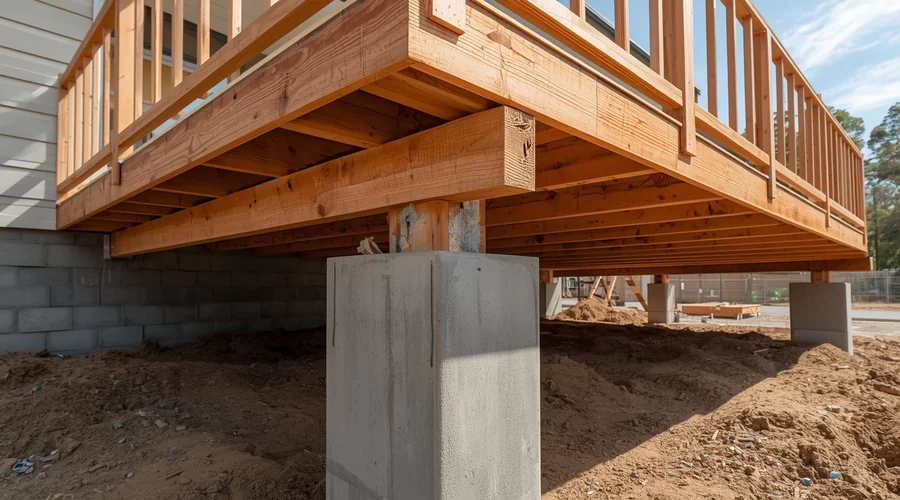
Site conditions. A flat block in Truganina is a different job to a sloped block in Wyndham Vale. Elevated decks need taller posts, more bracing, more concrete in footings.
Footings. Structural and invisible once boards go down — exactly why some builders cut corners there. Melbourne’s western suburbs sit on reactive clay soils; screw piles are often smarter than concrete.
Deck height. In Victoria, decks over 800mm above ground generally require a building permit.
Steps, balustrades, extras. Not optional if required for safety or permit compliance.
Access. Narrow side gates and tight backyards in older Melbourne homes add labour time.
Decking over concrete: worth knowing
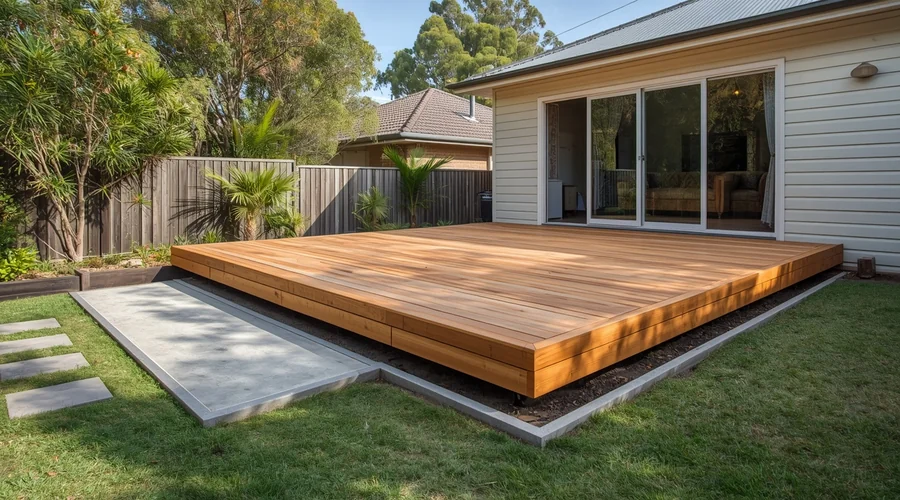
Common in 80s and 90s Melbourne homes where the outdoor area is a bare grey slab. The deck sits on a low-profile subframe over the slab — avoiding concrete removal costs.
Drainage matters. Water needs somewhere to go under the boards. A poorly installed deck over concrete traps moisture and the subframe rots. If the slab has significant cracking, address that first.
Maintenance: oil vs stain
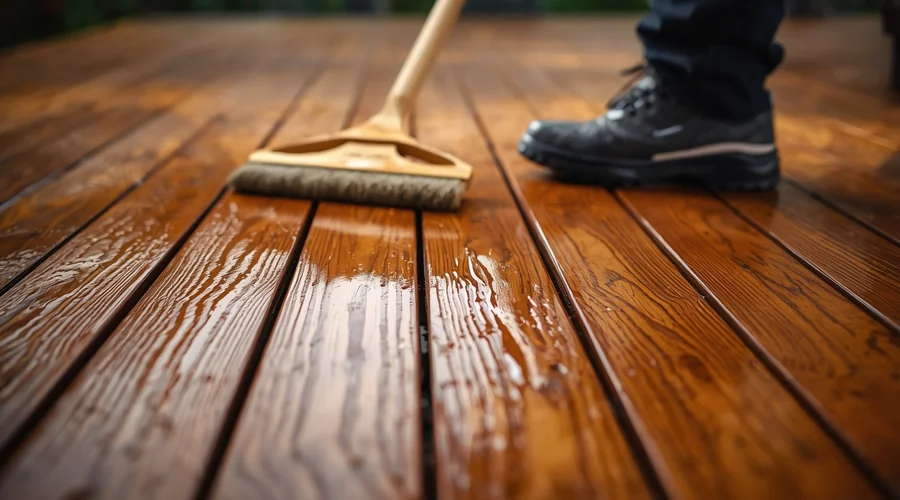
Decking oil soaks into the timber, shows the natural grain, needs reapplication every 12 months. Won’t bring back colour on grey timber — sand first.
Decking stain sits on the surface, provides more colour coverage, lasts 18–24 months between applications. Can peel if applied over poor surface prep.
Neither works well on a dirty or damp deck. Surface prep determines whether the product performs.
What to check before you sign a quote
Is the scope in writing? Must specify decking species, board width, subframe material, footing type, and site prep inclusions.
Does the job need a permit? Over 800mm above ground or with a balustrade — almost certainly yes.
What does clean-up include? Know whether offcuts, bags, and old materials are removed or left.
Indicative costs summary
| Type | Estimated range |
|---|---|
| Treated pine | $200–$350 per m² |
| Hardwood (merbau, spotted gum) | $300–$500 per m² |
| Composite | $350–$600 per m² |
Note: All estimates are indicative only, based on typical projects in the Melbourne metropolitan area. Actual costs vary depending on site conditions, materials, project scope, access, and other factors. Contact Naxan Renovations for an accurate quote tailored to your job.
Why homeowners in Melbourne’s west choose Naxan
⭐ 4.9/5 Google rating
250+ verified reviews
✓ Licensed & insured
VBA compliant, all work warranted
📍 Truganina, VIC
Melbourne’s western suburbs
📋 Scope in writing
No surprises. No disappearing acts.
Frequently asked questions
Do I need a council permit for a deck in Victoria?
In Victoria, decks over 800mm above natural ground level generally require a building permit. Lower-level decks may be exempt depending on size, location, and your local council’s requirements.
How long does timber decking last?
Treated pine typically lasts 15–25 years with proper maintenance. Hardwoods like merbau and spotted gum can last 25–40 years with regular oiling. Composite is generally warranted for 15–25 years.
How often does timber decking need to be oiled?
For Melbourne’s climate, hardwood decks need oiling every 12–18 months. Treated pine every 12 months. Composite requires no oiling.
Can you build a deck over an existing concrete slab?
Yes — common in Melbourne and saves the cost of concrete removal. Requires a low-profile subframe and proper drainage planning.
What’s the difference between decking oil and decking stain?
Decking oil penetrates the timber and needs more frequent reapplication. Decking stain sits on the surface, covers weathered boards better, and lasts longer between coats.
Which Melbourne suburbs does Naxan Renovations service?
We cover Truganina, Wyndham Vale, Point Cook, Hoppers Crossing, Werribee, Tarneit, Altona, and surrounding Melbourne western suburbs.
Most decking decisions come down to this: do the job properly once, or do it cheaply twice. We know which one we’d choose.
Book a Free Consultation
We cover Truganina, Wyndham Vale, Point Cook, Hoppers Crossing, Werribee, and surrounding suburbs. Give us a call for a free on-site quote.
Photos: Pexels. See attribution.txt for full credits.
